
Comparisons · Statement × document
Lava Jato and the economic crisis: "Lava Jato is not to blame" (2016) × study estimates (2021–2024)
What was said diverges from what a document records.
What was said
“Fico consternado com esse quadro. Acredito que a culpa não é da Lava Jato”
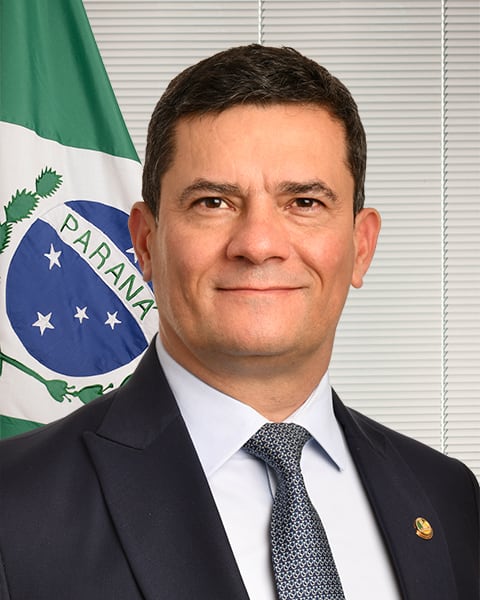
Sergio Moro, March 9, 2016 · Lecture · Lide Paraná event (Curitiba) · context and source
What happened afterward
- April 2017. Economist Eduardo Giannetti stated that Lava Jato worsened, but did not cause, the crisis. source
- December 16, 2019. Dallagnol responded to Toffoli by saying that blaming the investigations for companies going under is closing one's eyes to incompetence, mismanagement, and corruption.
“Dizer que a Lava Jato quebrou empresas é uma irresponsabilidade: 1. É fechar os olhos para a crise econômica relacionada a fatores que incluem incompetência, má gestão e corrupção.” source
- April 22, 2021. Lewandowski cited a study that would attribute to the operation a loss of R$142.6 billion of GDP and the dismantling of sectors (authorship differs among the sources). The same figure appears as a 2015 projection by a consulting firm (GO Associados, ex ante scenario), not as an observed loss of GDP. source
- March 17, 2024. Agência Brasil reported on studies by DIEESE and UFRJ/Uerj. DIEESE estimates 4.44 million potential jobs added up over 2014–2017, not people laid off; the UFRJ/Uerj study cites losses of up to R$142 billion in sectors, a figure from 2015 consulting firms. source
How they explained it
Moro and Dallagnol have not publicly changed their position; as of October 24, 2026, we did not find a statement from either responding to the 2021–2024 estimates.
Note
Moro's statement addresses the cause of the recession; the studies estimate the operation's impact on jobs, investment, and sectors, without necessarily asserting that it caused the national crisis. There is also disagreement among economists about the share attributable to the operation, to economic policy, and to the corruption under investigation. This is not a contradiction between the two positions: they are different questions, with methodologies to be examined in another entry in the archive.
Sources of the events
Economist Eduardo Giannetti stated in an interview with Estadão (April 2017) that Lava Jato helped worsen the crisis but did not cause it, and that the country would be in crisis and with high unemployment regardless of the operation.
Excerpt: “A Lava Jato não causou a crise econômica”
Source: Custo da má gestão de Dilma é maior do que o da Lava Jato, diz economista — Bocão News (BNews), based on an interview with Estadão, Apr. 23, 2017 · Fourth paragraph · open original ↗
News report · full text examined · accessed on Oct. 24, 2026
Limitations: Opinion of one economist, read in reproduction; original Estadão article not opened.
According to ConJur, on April 22, 2021 Justice Ricardo Lewandowski cited a PUC-SP study according to which Lava Jato allegedly removed R$142.6 billion from GDP and caused the dismantling of sectors of the economy.
Source: Julgamento de suspeição tem embate sobre "legado lavajatista" — Consultor Jurídico, Apr. 22, 2021 · Sixth paragraph · open original ↗
News report · full text examined · accessed on Oct. 24, 2026
Limitations: Agência Brasil attributes a similar amount (R$142 billion) to a study by UFRJ and Uerj, not PUC-SP; the discrepancy in authorship has not been resolved.
According to Agência Brasil, a DIEESE study estimated 4.44 million potential jobs, summed over 2014–2017, associated with Lava Jato (not people laid off; the article uses the terms 'jobs' and 'positions' without that caveat), and a study by UFRJ and Uerj estimated at R$142 billion the losses in the construction, shipbuilding, heavy engineering and metalworking sectors.
Source: Lava Jato destruiu 4,44 milhões de empregos, aponta estudo — Agência Brasil, Mar. 17, 2024 · First paragraphs · open original ↗
News report · full text examined · accessed on Oct. 24, 2026
Limitations: Estimates by modeling, not direct measures of causality; other economists attribute the recession mainly to economic policy (see fonte). Methodological details in another record of the archive.