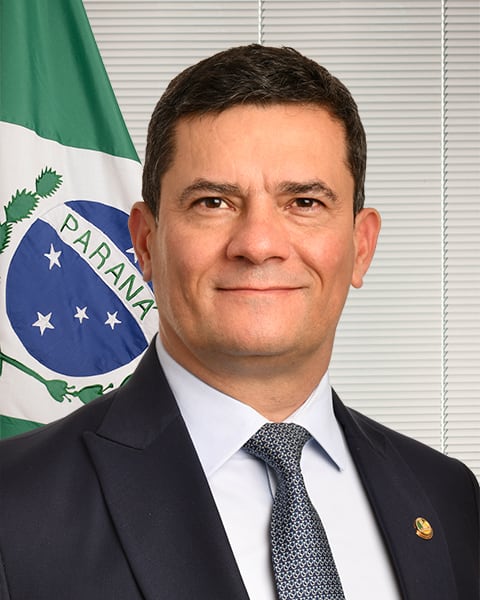
On November 1, 2018, after a 1 hour 42 minute meeting in Rio, Moro accepted becoming Minister of Justice and Public Security, with an anticorruption and anti-organized-crime agenda. In 2020, Moro said he had been promised 'carte blanche' to appoint aides, including at the Federal Police (PF); Bolsonaro said he had agreed to 'autonomy,' with veto power over key posts. In August 2019, asked whether Moro had carte blanche, Bolsonaro said the veto power is his. In the sources read there is no public record of the 2018 conversation, nor a 2018 statement by Bolsonaro with 'carte blanche.'
Evidence
On November 1, 2018, after a meeting of 1 hour and 42 minutes in Rio de Janeiro with President-elect Jair Bolsonaro, Sergio Moro released a statement saying he had accepted the invitation to be Minister of Justice and Public Security.
StatementSingle source
Excerpt: “aceitei o honrado convite”
Source: Sérgio Moro aceita convite e será ministro da Justiça de Jair Bolsonaro (leia a nota) — Poder360, Nov. 1, 2018 · text of the article and transcribed statement · open original ↗
News report · full text examined · accessed on Oct. 24, 2026
Limitations: The statement was read in one outlet's transcription; Moro's original statement was not located in a primary source.
Bolsonaro posted on Twitter, on November 1, 2018, that Moro had accepted the invitation and that his anti-corruption and anti-organized-crime agenda would be the guiding line of the government.
StatementSingle source
Excerpt: “Sua agenda anti-corrupção, anti-crime organizado, bem como respeito à Constituição e às leis será o nosso norte!”
Source: Sérgio Moro aceita convite e será ministro da Justiça de Jair Bolsonaro (leia a nota) — Poder360, Nov. 1, 2018 · tweet embedded in the article · open original ↗
News report · full text examined · accessed on Oct. 24, 2026
Limitations: Tweet read via the outlet's reproduction; original profile not consulted.
Poder360 wrote on November 1, 2018, in its own text and not as a quotation, that the president-elect gave Moro 'carte blanche' to run the ministry. Moro's statement does not use the expression.
News reportSingle source
Source: Sérgio Moro aceita convite e será ministro da Justiça de Jair Bolsonaro (leia a nota) — Poder360, Nov. 1, 2018 · paragraph after the statement · open original ↗
News report · full text examined · accessed on Oct. 24, 2026
Limitations: In the sources read, we did not locate a 2018 statement by Bolsonaro with 'carte blanche'. The lead cited in searches (Folha, cited by Bahia Notícias in 2019) says he said it when he chose Moro, without the date or the text.
On August 24, 2019, asked whether Moro had carte blanche, Bolsonaro answered that the power of veto is his; Folha de S.Paulo noted that he had changed his tune compared with when he chose Moro.
StatementSingle source
Excerpt: “carta branca eu tenho poder de veto em qualquer coisa, se não eu não sou presidente”
Source: Não tenho problema nenhum com Moro, diz Bolsonaro sobre sua ingerência em ministros (Folhapress) — Bahia Notícias (content from Folha de S.Paulo), Aug. 24, 2019 · first paragraphs · open original ↗
News report · full text examined · accessed on Oct. 24, 2026
Limitations: Folha article reproduced by another outlet; the original Folha article was not read.
Law No. 13.964, of December 24, 2019, improved criminal and criminal procedure legislation; it is the law that resulted from Minister Moro's 'anticrime' bill, processed in Congress in 2019.
Official documentProven in a document
Source: Lei nº 13.964, de 24 de dezembro de 2019 (aperfeiçoa a legislação penal e processual penal) — Office of the President of the Republic — Planalto, Dec. 24, 2019 · summary and art. 1 · open original ↗
Law/regulation (primary) · excerpt examined · accessed on Oct. 24, 2026
Limitations: The law was read only in its heading. The relationship between the law and Moro's bill (and which of its points were vetoed or changed) is known from news reports seen in searches but not read; Moro himself said, on April 24, 2020, that the bill 'was not approved in its entirety'.